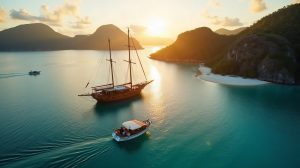
The honest answer: the boat ride to Komodo is calm for most of the year, but the Flores Sea has a temper, and how rough your crossing feels depends on the month, the segment of the route, and the boat you choose. If you are prone to seasickness, you can plan around all three — this guide covers the seasonal wave patterns, the bumpiest stretches, medication timing, and which itineraries keep you in sheltered water.
How Rough Is the Boat Ride to Komodo, Really?
A standard Komodo day trip by speedboat is a long day on the water — typically 10 to 12 hours from Labuan Bajo across five to seven stops such as Padar, Komodo or Rinca, Pink Beach, and one or two snorkeling reefs. Much of that time is spent inside the archipelago, where dozens of islands break up the swell and the water can look more like a lake than open sea.
The rougher moments come on the exposed stretches between island groups, where wind chop and swell can hit the boat side-on. On a calm-season morning, most guests barely notice the movement. In the windier months, the same crossing can mean 30 to 45 minutes of consistent banging over waves. It is rarely unsafe on a well-run boat — operators simply do not sail when conditions cross safety limits — but it can be uncomfortable if you have not prepared.
Flores Sea Conditions by Season
Komodo National Park sits between two monsoon systems, so the sea state follows a fairly predictable rhythm:
- April to June — the sweet spot. Light winds, generally smooth seas, the most forgiving crossings of the year.
- July to September — dry, busy, breezier. Southeast trade winds pick up. Mornings are usually manageable; afternoons can turn choppy on exposed segments.
- October to November — the second calm window. The trades fade before the rains arrive. Seas settle, snorkeling visibility is often excellent, crowds thin out.
- December to February — wet season, most variable. The northwest monsoon brings squalls and the highest chance of rough water or weather-related schedule changes.
- March — transition. Conditions steadily improve as the wet season winds down.
None of this is absolute, but if a smooth ride is your priority, aim for April–June or October–November.
Which Segments of the Crossing Are Roughest?
- Labuan Bajo to the inner islands (Kelor, Rinca, Kalong): mostly sheltered water — the gentlest stretch of any itinerary in every season.
- The middle crossings toward Padar and Komodo: the most exposed legs, where chop and swell are most noticeable.
- Open snorkel sites like Manta Point and Taka Makassar: these sit in channels, so the boat can rock at anchor even after a smooth transit; currents here are stronger too.
- The afternoon run home: almost always the bumpiest part of the day in windy months, after the sea breeze has built. Skippers often reorder stops so the longest exposed leg happens in the calmer morning.
Why Prices Rise in July–September and December–January
Peak pricing in Komodo does not track the calmest seas. Shared speedboat day trips typically run from around USD 85–120 per person (indicative, boat only, park fees extra), but in the July–September and December–January windows the same seats commonly climb to roughly USD 97–150.
The July–September surge is pure demand: northern-hemisphere summer holidays meet reliably sunny dry-season skies and boats sell out — even though the trade winds actually make afternoons breezier than in the shoulder months. December–January spikes for the opposite reason: Christmas and New Year demand collides with the wet season’s most variable seas, and weather cancellations tighten supply on the days boats do sail.
The takeaway for wave-sensitive travelers is good news: the calmest water of the year — April–June and October–November — overlaps with lower shoulder-season pricing. You pay less and rock less.
Seasickness Tips That Actually Work
- Sit low, central, toward the stern. The middle-rear of the boat moves least. Avoid the bow on choppy days, and avoid enclosed cabins if you already feel off — losing the horizon makes nausea worse.
- Watch the horizon. Fix your gaze on a stable distant point. Do not read or scroll your phone during rough stretches.
- Medicate before departure, not after symptoms start. Motion-sickness tablets work best taken 30–60 minutes before boarding; once nausea sets in they do far less. Ask a pharmacist which option suits you.
- Eat a light breakfast. Toast, rice, or a banana beats both an empty stomach and a heavy meal. Skip alcohol the night before.
- Stay hydrated and get fresh air. Sip water all day; fresh air on deck genuinely helps.
- Ginger and acupressure bands take the edge off for many travelers, with no side effects.
When Operators Cancel for Safety — and Reschedule Policies
Reputable operators treat the harbormaster’s guidance and their captains’ judgment as final. When wind and swell exceed safe limits — most often during December–February squalls — departures are delayed, rerouted to sheltered stops, or cancelled.
Policies vary by operator, so confirm before booking, but standard Labuan Bajo practice looks like this:
- Cancellation before departure: a free reschedule to the next available day, or a refund of the trip fare if your dates cannot flex.
- Mid-trip route changes: captains may swap exposed stops for sheltered alternatives rather than cancel outright — itineraries are always conditions-dependent.
- Buffer days are your best insurance. Schedule Komodo early in your Labuan Bajo stay with at least one spare day, so a weather reschedule does not cost you the experience.
When you book with our team, we monitor the forecast before departure and message you proactively on WhatsApp if a change looks likely.
Wave-Sensitive? Choose a Shorter Route or a Steadier Boat
If rough water is a dealbreaker, two alternatives keep the experience while cutting the exposure dramatically.
The first is the Kelor–Rinca–Kalong island hopping day trip, which stays almost entirely within the sheltered inner islands: Kelor’s viewpoint and snorkeling, ranger-guided dragon trekking on Rinca, and the flying-fox colony at Kalong toward sunset. You still get dragons, a summit view, and a swim — with a fraction of the open-water time.
The second is upgrading the hull. A VIP speedboat day trip puts you on a larger, heavier boat with a deeper-V hull and cushioned cabin, which rides noticeably softer through chop than standard shared boats. VIP charters also carry fewer guests, so you can pick the most stable seat. Private charters start from around USD 500 per boat per day (indicative, varies by vessel class and season) — for a family splitting the cost, the comfort difference on a windy day is significant.
Quick Planning Cheat Sheet
- Calmest seas + best value: April–June, October–November.
- Busy but breezy: July–September — book morning departures early.
- Most variable: December–February — build in a buffer day.
- Most sheltered route: the Kelor–Rinca–Kalong inner-island loop.
- Smoothest ride: VIP-class speedboat or private charter, mid-stern seat, medicate before boarding.
Frequently Asked Questions
Is the boat ride to Komodo dangerous?
No — on a licensed, well-maintained boat with a professional crew, the crossing is routine. Captains follow harbor authority guidance and cancel or reroute when conditions exceed safe limits. The realistic concern is comfort, not safety.
How long is the boat ride from Labuan Bajo to Komodo Island?
By speedboat, the run to the Komodo Island area typically takes around 1 to 1.5 hours each way depending on the boat and conditions, within a 10–12 hour day trip covering multiple stops. Slower wooden boats take considerably longer.
Which month has the calmest seas for a Komodo trip?
April through June is the most reliably calm window, with October–November a close second. Both fall outside peak-price season, so wave-sensitive travelers get smoother water and lower fares at the same time.
What should I take for seasickness on a Komodo boat trip?
A motion-sickness tablet taken 30–60 minutes before departure works best for most people — ask a pharmacist which suits you. Support it with a light breakfast, water, a mid-stern seat, and eyes on the horizon. Ginger and acupressure bands are a drug-free backup.
What happens if my Komodo trip is cancelled because of weather?
Standard practice among reputable Labuan Bajo operators is a free reschedule to the next available departure, or a refund of the trip fare if your dates cannot move. Confirm the specific policy when booking, and keep a buffer day during the December–February wet season.
I get seasick easily — should I still visit Komodo?
Yes. Travel in a calm-season month, pick the sheltered Kelor–Rinca–Kalong route or a stabilized VIP-class boat, and medicate before boarding. With those three adjustments, most motion-sensitive guests complete the trip comfortably.
Plan a Smooth Crossing With Local Advice
Sea conditions change week to week. Tell us when you are traveling and we will recommend the calmest realistic route and the right boat class — honestly, including when we think you should wait a day. Message our Labuan Bajo team on WhatsApp at wa.me/6281139414563 or email [email protected] for a same-day answer on conditions, availability, and reschedule-friendly bookings.